Visit us


Is Trampoline Good Exercise? Benefits for Kids & Adults

Dennis Y
September 12, 2026
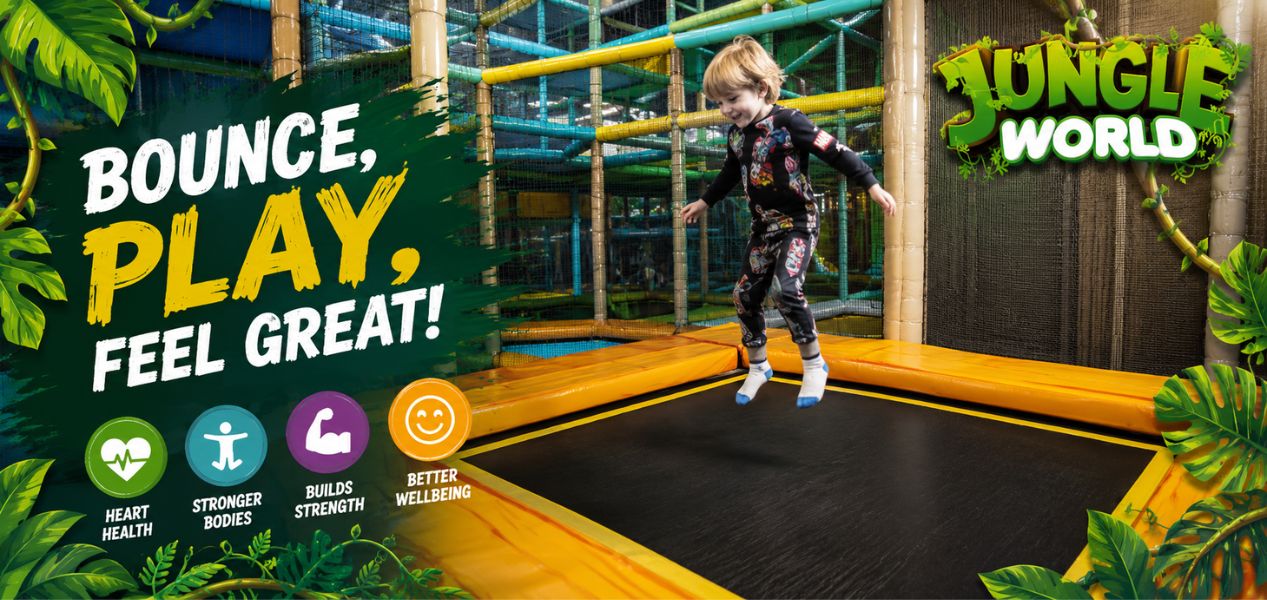
Ask any child who has spent an hour bouncing at an indoor play centre whether trampolining feels like exercise, and they will probably say no. That is exactly the point. Trampolining is one of those rare physical activities that gets the heart pumping, works the whole body, and builds strength without anyone feeling like they are doing a workout.
But is trampoline good exercise in any meaningful, measurable sense? The research says yes, and by quite a wide margin.
What the Science Says About Trampoline Exercise
Let's break it down with actual evidence.
In 1980, researchers working with NASA's Biomechanical Research Division at Moffett Field, California, published a study in the Journal of Applied Physiology comparing treadmill running with jumping on a trampoline. Their finding was clear: for similar levels of heart rate and oxygen consumption, trampoline jumping produced greater biomechanical stimuli than running. In other words, the body works harder on a trampoline than it does jogging, while feeling the same level of effort.
That study became the bedrock of a lot of modern trampolining research, and subsequent work has only added to the picture.
One study found that 14 weeks of mini-trampoline exercises increased seniors' ability to regain their balance before falling by about 35%. Research published in the Journal of Aging and Physical Activity found trampoline exercise improved balance and coordination in older adults when compared with other low-impact exercise forms.
Studies also show that trampolining reduces approximately 80% of the force exerted on joints compared with walking or running on pavement, which makes it especially appealing for anyone with joint concerns.
How Trampolining Counts Towards the NHS Activity Guidelines
The NHS recommends that children and young people aged 5 to 18 get at least 60 minutes of moderate to vigorous physical activity every day, and that on three of those days, activities should include exercises for strong muscles and strong bones, such as jumping and running.
Trampolining ticks both boxes at once. A single session combines cardiovascular activity (getting the heart rate up) with the kind of repeated loading that builds bone density and strengthens muscles in the legs, core, and arms.
The British Heart Foundation has backed trampolining through its 'Get Kids on the Go' campaign, and Professor of Exercise and Health Sciences Ken Fox, writing for the NHS, advocates it as a way to get active with kids so that parents can join in and set a good example.
That family dimension matters. When parents bounce alongside their children, they are modelling active habits and getting their own workout in the process.
The Physical Benefits, One by One
Here are the main ways that trampoline exercise works on the body.
Heart and Cardiovascular Health
Cardio activity strengthens the heart muscles and decreases the amount of work the body has to do to pump blood, which can lower resting heart rate, cholesterol levels, and triglyceride levels. Bouncing raises the heart rate quickly and sustains it throughout a session, delivering genuine cardiovascular benefit in a shorter time than many traditional workouts.
Bone Strength
The NASA study cited trampolining as one of the best exercises for rebuilding lost bone tissue, after researchers studied astronauts who lost bone mass in space and observed them regaining it through rebounding. The increased G-force on the bones strengthens them with less risk of injury than other forms of exercise.
Research published in PMC on competitive trampolining found that regular bouncing influences trabecular bone structure, bone size, and overall bone strength. The mechanical loading from controlled impacts signals the body to maintain and build bone tissue.
For children, this is particularly relevant. Childhood and adolescence are the window when the body lays down the most bone density, and weight-bearing activities like jumping directly support that process.
Balance and Coordination
Bouncing on a trampoline stimulates the vestibular system in the inner ear, leading to improved balance. A study published in the Journal of Aging and Physical Activity found that trampoline exercise improved balance and coordination compared to other low-impact exercise forms.
As children learn to jump higher, land safely, and attempt new movements, they develop motor skills that carry over into other sports and physical activities.
Muscle Strength
Trampoline exercises work the legs, thighs, abdomen, arms, and hips, increasing agility and improving overall balance. Because every bounce requires the body to stabilise itself mid-air, the core muscles are engaged throughout, even during what looks like simple jumping.
Mental Wellbeing
Exercise in general is associated with stress relief because it releases endorphins, the natural substances that help people feel better and maintain a positive attitude.
Those who exercise regularly dropped the number of poor mental health days per month by over 40%, according to UCLA Health research. Trampolining, because it feels enjoyable rather than like a chore, makes it far easier to reach that threshold of regular physical activity.
Why Trampolining Works So Well for Children
Getting children to do structured exercise is one of the hardest parts of parenting. Trampolining sidesteps the problem entirely.
Unlike running or other high-impact sports, trampolining is gentler on the joints, making it a great option for children of all fitness levels. Bouncing around for an hour can burn as many calories as jogging, but it feels far more engaging.
Jumping on a trampoline is a fun way for children to get their heart pumping and improve their cardiovascular health. As children bounce, their heart rate increases, circulation improves, and their lungs work harder to supply oxygen to the body.
Children do not count minutes on a trampoline. They count jumps, attempt new tricks, race friends to see who can bounce the highest. The exercise happens without anyone having to push them to do it.
Trampolining at an Indoor Play Centre
One practical barrier to regular trampolining is access. Not every family has space for a trampoline at home, and outdoor trampolines depend entirely on the weather.
Indoor play centres solve both problems. At Jungle World Park Blackpool, the multi-level play frame includes trampolines as part of a wider circuit of activities, meaning children move between bouncing, climbing, and the mini zipline throughout a session. That variety keeps activity levels high and stops any single activity from becoming repetitive.
Sessions run with controlled capacity, which keeps the environment safe and gives children proper room to move. Dedicated staff monitor the play areas throughout, and age-appropriate zones mean toddlers and older children each get space that suits their ability and energy level.
For families visiting Blackpool during school holidays or weekends, a session at Jungle World Park Blackpool fits naturally into the day. The Tiki Café on-site (which holds a 5-star hygiene rating) means families can refuel without leaving the venue.
Who Benefits Most from Trampoline Exercise?
Trampolining is one of the few forms of exercise that genuinely works across age groups.
Children aged 5 to 12 get cardiovascular conditioning, bone strengthening, and motor skill development all at once, in a format they actively want to do.
Toddlers benefit from the gentler movement and sensory stimulation of smaller soft play trampolines, helping them develop balance and spatial awareness at an early stage.
Adults get a low-impact aerobic workout that is easier on the knees and hips than running, with the added benefit of core strengthening through stabilisation.
A 12-week mini-trampoline programme, performed twice weekly for 45 to 60 minutes, showed improvements in bone mineral density alongside balance and strength benefits. Those results translate across different ages, not just older adults.
A Note on Safety
Trampolining is safe when the equipment is maintained properly and the environment is supervised. Indoor play venues in the UK follow guidance from the Royal Society for the Prevention of Accidents (RoSPA) and British Standards Institution play equipment standards (BS EN 1176).
At Jungle World Park Blackpool, the basic safety rules are straightforward:
- Children must wear socks at all times in the play areas
- Separate zones keep different age groups apart
- Staff are stationed throughout the venue during every session
- Sessions are capacity-controlled to prevent overcrowding
Children who are uncertain or nervous can take their time. There is no pressure to attempt anything beyond their comfort level.
FAQs About Trampoline Exercise
Q: Is trampolining good exercise for weight loss?
Yes. Trampolining burns a comparable number of calories to jogging, but the joint-friendly nature of bouncing means people can sustain it longer and more comfortably. A full session at an indoor play centre, combined with climbing and active play, adds up to a proper calorie burn without it feeling like a gym workout.
Q: How long should children bounce on a trampoline to get exercise benefits?
The NHS recommends children aged 5 to 18 get at least 60 minutes of moderate to vigorous physical activity each day. A standard indoor play session achieves this easily, especially when combined with other active play like climbing frames, mini ziplines, and running between activities.
Q: Is trampoline exercise safe for children with joint problems?
Trampolining is lower-impact than running because the trampoline surface absorbs a large proportion of the landing force. That said, parents of children with specific joint conditions should check with their GP before booking a session. An indoor play centre's staff can also advise on age-appropriate zones within the venue.
Q: Can adults get a good workout from bouncing on a trampoline?
Absolutely. Research confirms that trampolining raises the heart rate effectively, strengthens bones, and works the core and lower body muscles. Adults often find it more enjoyable than running, which makes them more likely to keep doing it consistently, which is where the real health benefit comes from.
Q: What should children wear for trampolining at an indoor play centre?
Socks are required at all times in the play areas at Jungle World Park Blackpool. Grip socks offer better traction and are available to purchase on-site. Comfortable, fitted clothing that allows free movement is ideal. Loose items like scarves or jewellery are best removed before jumping.
Ready for a
Wild Adventure?
Book your Jungle World visit today!

Limited capacity per session - secure your spot now!


