Visit us


Is Indoor Trampoline Good Exercise?

Dennis Y
September 12, 2026
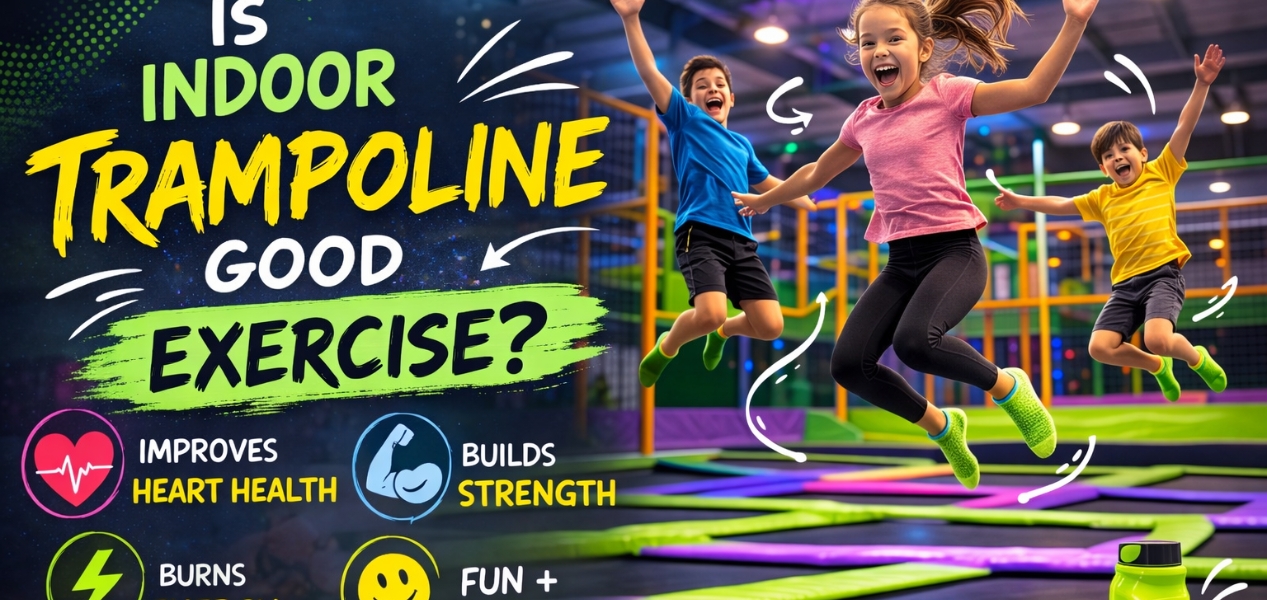
Parents seeking active play options for their children often wonder whether bouncing qualifies as proper physical activity. Research shows that indoor trampolining delivers genuine cardiovascular benefits alongside muscle strengthening, making it far more than just recreational fun.
At venues like Jungle World Park in Leyland and Blackpool, families discover that structured jumping sessions can match or exceed traditional workouts whilst creating joyful memories. Let's examine what science reveals about trampolining and why this activity deserves a place in your fitness routine.
Understanding Trampoline Exercise Benefits
Bouncing on springy surfaces activates your entire body differently than ground-based activities. Each jump forces muscles to work against gravity whilst the landing phase creates resistance that builds strength.
Cleveland Clinic exercise specialists note that rebounding (the technical term for trampoline jumping) engages multiple muscle groups simultaneously. Your core, glutes, legs, and back muscles all activate during each bounce, creating what researchers call a full-body workout.
How Indoor Trampoline Good Exercise Compares to Running
A landmark NASA study found that trampolining is 68% more efficient than jogging for cardiovascular conditioning. This research, originally conducted to help astronauts recover from space missions, proved that bouncing stimulates the body at a cellular level.
The American Council on Exercise confirmed these findings, reporting that 20 minutes of trampoline jumping burns the same calories as running at 10 kilometers per hour for the same duration. A 150-pound person burns approximately 82 calories during 12 minutes of bouncing, compared to 71 calories from treadmill running in the same period.
Here is why this matters: the trampoline mat absorbs impact that would otherwise stress your joints. Running on pavement creates jarring forces on ankles, knees, and spine with each footfall. The pliable surface reduces these stresses whilst maintaining workout intensity.
Cardiovascular and Metabolic Improvements
Heart Health Through Bouncing
Regular jumping sessions strengthen heart muscles and improve circulation throughout your body. According to research published in rehabilitation journals, mini-trampoline exercises enhance blood oxygen delivery whilst reducing resting heart rate.
The Arthritis Foundation reports that participants in trampoline programmes showed decreased blood pressure and normalized blood sugar levels after 12 weeks. These cardiovascular improvements occurred alongside weight loss and pain reduction.
Calorie Burning and Weight Management
The average person burns 250-325 calories per hour through recreational trampolining, with competitive or high-intensity sessions reaching much higher levels. Factors affecting calorie expenditure include:
- Body weight (heavier individuals burn more calories)
- Jump intensity and height
- Workout duration
- Rest periods between jumping sessions
A study of 18 overweight adults participating in 12 weeks of trampoline exercise showed participants lost fat, gained muscle mass, and experienced significant drops in blood pressure. Their blood sugar levels normalized and self-reported pain levels decreased.
At indoor play venues like Jungle World Park, families can participate in extended active sessions without the monotony of traditional exercise. Children often bounce for hours without realizing they're burning substantial calories through play.
Bone Density and Balance Improvements
Building Stronger Bones
Research published in the Journal of Sport and Health Science found competitive trampolinists possessed greater bone density, area, microarchitecture, and estimated bone strength compared to non-jumpers. The study focused particularly on hip and spine measurements, where fractures pose serious risks as we age.
A randomized controlled trial involving 40 adults with osteopenia (weakened bones) compared trampoline exercise to conventional treatment using vitamin D and calcium supplements. After three months of twice-weekly 60-minute sessions, the trampoline group showed higher bone density near the hip alongside improvements in mobility, strength, and walking ability.
A separate 2023 study examined 37 postmenopausal women who completed 12 weeks of three 30-minute trampoline workouts weekly. Researchers documented significant bone density increases, particularly important for this at-risk population.
Enhanced Balance and Coordination
The International Society of Electrophysiological Kinesiology conducted research showing that 14 weeks of mini-trampoline exercises increased seniors' ability to regain balance before falling by approximately 35%. This improvement translates to reduced injury risk and greater confidence in daily activities.
Children develop coordination skills naturally through bouncing. The unstable surface requires constant micro-adjustments that train the brain and muscles to work together efficiently. Parents visiting Jungle World Park often notice their children's improved spatial awareness after regular play sessions.
Muscle Development Without Joint Stress
Full-Body Muscle Activation
Trampolining works your entire body simultaneously. The upward jump phase activates leg muscles (quadriceps, hamstrings, calves), glutes, and core stabilizers. Your arms and shoulders engage to maintain balance and generate momentum.
Landing requires controlled muscle contraction throughout your body to absorb impact safely. This eccentric loading (muscle lengthening under tension) builds strength differently than traditional resistance training.
Studies comparing trampoline exercise to conventional gym workouts found that participants achieved similar results in half the time. The g-force produced during bouncing rapidly develops muscle whilst burning fat stores.
Low-Impact Benefits for All Ages
The soft landing surface makes trampolining suitable for people who cannot tolerate high-impact activities. Research shows the material absorbs much of the landing force that would otherwise stress joints.
For individuals with arthritis, joint pain, or previous injuries, this low-impact option provides cardiovascular conditioning without exacerbating existing conditions. Physical therapy offices increasingly incorporate trampolines into rehabilitation protocols for this reason.
Mental Health and Lymphatic System Benefits
Stress Reduction Through Movement
Any cardiovascular exercise releases endorphins, brain chemicals associated with positive mood and reduced stress perception. Morton Walker's research identified 30 specific anti-stress benefits from rebounding in his book "Jumping for Health."
UCLA Health research found that regular exercisers experienced 40% fewer poor mental health days compared to sedentary individuals. The playful nature of bouncing may enhance these benefits by combining physical activity with genuine enjoyment.
Lymphatic System Stimulation
Your lymphatic system removes cellular waste and toxins but lacks its own pump (unlike your circulatory system). The rhythmic bouncing motion creates a pumping effect that stimulates lymph flow throughout your body.
Research demonstrates that rebounding enhances lymphatic circulation, potentially improving immune function and reducing inflammation. Some studies suggest lymph flow increases more than 15 times normal rates during jumping activities.
Safety Considerations for Indoor Trampolining
The American Academy of Pediatrics cautions against large backyard trampolines due to injury risks. However, supervised indoor facilities with structured safety measures present a different risk profile. Many parents still ask, are indoor trampolines safe for toddlers The answer depends on strict supervision, age-specific zones, soft padding, and clear safety rules designed specifically for younger children.
Venues like Jungle World Park implement specific safety protocols:
- Staff monitoring throughout play areas
- Limited capacity to prevent overcrowding
- Separate zones for different age groups
- Proper surface padding and equipment maintenance
For home mini-trampolines (rebounders), safety guidelines include:
- Starting with gentle bounces to familiarize yourself with the equipment
- Wearing grip socks for better traction
- Placing the rebounder on stable, level surfaces
- Consulting healthcare professionals before beginning if you have existing conditions
Practical Implementation for Families
Creating Effective Workout Routines
Research suggests that even 10-20 minutes daily provides substantial cardiovascular benefits. Beginners should start with light, controlled bounces focusing on proper form rather than height.
As fitness improves, incorporate variations:
- High knees whilst bouncing
- Squat jumps for lower body emphasis
- Twisting motions for core activation
- Single-leg jumps for balance challenge
Professional trainers increasingly offer trampoline fitness classes that combine jumping with strength exercises using dumbbells or resistance bands. These hybrid workouts maximize calorie burning whilst building lean muscle.
Making It Sustainable and Enjoyable
The greatest advantage of trampoline exercise may be adherence. Studies confirm that people maintain enjoyable activities longer than monotonous routines they view as work.
Children naturally gravitate toward bouncing, meaning parents don't need to coerce them into physical activity. At facilities like Jungle World Park, the multi-level play frames and additional attractions ensure variety that sustains interest across multiple visits.
For adults, the fun factor reduces the mental resistance often associated with scheduled workouts. You're more likely to exercise consistently when you genuinely look forward to the activity.
Conclusion: The Verdict on Indoor Trampoline Exercise
Scientific evidence strongly supports trampolining as legitimate, effective exercise suitable for all ages. The combination of cardiovascular conditioning, muscle development, bone strengthening, and balance improvement rivals traditional workouts whilst offering superior enjoyment.
Research demonstrates clear advantages: 68% greater efficiency than jogging, comparable calorie burning to running with reduced joint stress, and measurable improvements in bone density, balance, and metabolic markers. These benefits occur through activities children perceive as pure fun rather than obligatory exercise.
Whether you're exploring the multi-level attractions at Jungle World Park or using a home mini-trampoline, consistent bouncing sessions deliver genuine health improvements. The accessibility, low injury risk when properly supervised, and natural appeal to all ages make indoor trampolining an excellent addition to active lifestyles.
Next steps: start with short sessions focusing on controlled bouncing, gradually increase duration and intensity as fitness improves, and consider combining jumping with other activities for comprehensive wellness. Most importantly, approach trampolining as an enjoyable movement practice rather than a chore, maximizing your likelihood of maintaining this beneficial activity long-term.
Frequently Asked Questions
Can trampolining replace my regular gym routine?
Trampolining provides cardiovascular conditioning and muscle strengthening comparable to many traditional exercises. A 30-minute session delivers similar benefits to longer gym visits. However, combining trampolining with targeted strength training and flexibility work creates the most balanced fitness programme. For weight loss specifically, regular bouncing sessions paired with healthy eating produce measurable results according to multiple research studies.
How long should children jump to see health benefits?
Children burn calories naturally through play and don't require structured workout durations. At facilities like Jungle World Park, letting children play freely for 45-60 minutes provides substantial physical activity. Research shows kids often bounce for extended periods without fatigue when they're enjoying themselves, burning considerably more calories than forced exercise sessions would achieve.
Is indoor trampolining safe for people with knee problems?
The low-impact nature makes trampolining gentler on knees than running or jumping on hard surfaces. The mat absorbs shock that would otherwise stress joints. That said, individuals with existing knee conditions should consult healthcare professionals before beginning any new exercise programme. Starting with very gentle bounces and gradually increasing intensity allows your body to adapt safely.
Will trampoline exercise help with weight loss?
Yes, when combined with appropriate nutrition. A person burns 250-325 calories per hour through recreational bouncing, with higher intensity sessions burning more. The key advantage lies in sustainability. People maintain trampoline exercise longer than activities they find tedious, leading to greater overall calorie expenditure over weeks and months. Research shows participants lost fat and gained muscle during 12-week trampoline programmes.
How does trampolining benefit older adults specifically?
Studies show significant improvements in balance, bone density, and fall prevention for seniors participating in regular trampoline sessions. The 35% improvement in balance recovery documented in research translates to reduced injury risk. Bone density increases help prevent fractures, whilst cardiovascular conditioning supports healthy ageing. The low-impact nature protects joints that might not tolerate running or high-impact activities.
Ready for a
Wild Adventure?
Book your Jungle World visit today!

Limited capacity per session - secure your spot now!


