Visit us


What Is a Sensory Wall

Dennis Y
September 12, 2026
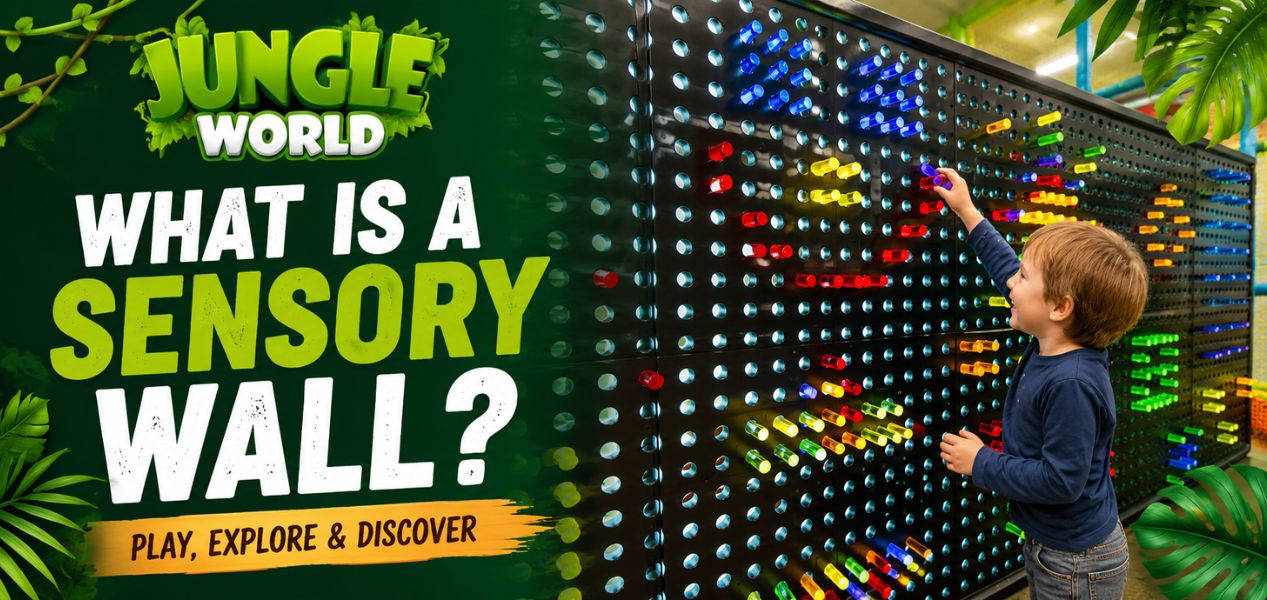
If you have ever watched a child stop mid-stride at a play centre to press buttons, spin dials, and run their fingers along textured panels mounted on the wall, you have seen a sensory wall in action. These installations pop up in schools, therapy rooms, waiting rooms, and indoor soft play centres across the UK. Yet many parents are not quite sure what they are or why they matter so much.
Let's break it down properly.
What Is a Sensory Wall?
A sensory wall is an interactive, wall-mounted surface designed to engage a child's senses through touch, sight, sound, and sometimes smell. It typically features panels packed with different textures, moving parts, colour-changing lights, musical elements, and tactile activities such as beads, knobs, gears, and fabric patches.
Think of it as a vertical playground for the brain. Instead of climbing or running, children reach out, press, twist, and tap their way through a range of sensory experiences, all at their own pace and in their own way.
A sensory wall is a hands-on, interactive space designed to engage children's senses, including tactile, visual, and auditory senses. These walls are filled with materials that encourage young children to explore different textures, shapes, colours, and movements.
The size and complexity of a sensory wall can vary widely. Some are simple boards with a few textures and a spinning mirror. Others cover entire walls with dozens of interactive components. What they all share is a focus on giving children purposeful, multi-sensory input in a safe setting.
Why Do Children Need Sensory Play?
To understand why a sensory wall matters, you need to understand what sensory play does for a developing child.
Children are born as sensory explorers. Every time a baby squeezes a toy, every time a toddler presses their hands into a playdough, they are building neural connections in the brain. Sensory play has multiple benefits: it helps build stronger nerve connections in the brain, leads to well-developed fine motor skills for hand-eye coordination, improves memory when an activity is repeated, and helps with language development.
Here is why this matters. The brain organises itself partly through sensory experiences in early childhood. When a child touches something rough and something smooth, their brain registers the difference and files it away. Over time, these experiences stack up and help with reading, writing, coordination, and emotional regulation.
Sensory play helps develop senses, encourages problem-solving, and builds nerve connections in the brain. Sensory stimulation also engages different areas of the brain, helping children absorb and retain more information.
A sensory wall brings all of this into one accessible, structured space.
What Does a Sensory Wall Include?
The contents of a sensory wall depend on who designed it and who it is meant for. Here is a look at the most common elements you will find.
Tactile panels: Sections covered in different materials such as velvet, rubber, wood, and ridged plastic. Children touch and stroke these to experience contrast between textures. Surfaces with different textures, such as rough, smooth, bumpy, or squishy, provide a rich tactile experience. This helps children develop their sense of touch, motor skills, and hand-eye coordination.
Visual elements: Mirrors, colour-changing lights, spinning discs, and bold patterns. Bright colours, patterns, and visually engaging elements like mirrors and lights encourage visual exploration.
Sound components: Drums, xylophones, chimes, or electronic sound panels. Musical play panels engage hearing. Children can bang on drums or play a xylophone to create sound and music. Their nervous systems process these sounds and help stimulate their mental and cognitive functions.
Interactive mechanisms: Gears, knobs, beads in tracks, zip pulls, buckles, and lace boards. These are especially good for fine motor development.
Bubble tubes and light panels: Particularly popular in soft play centres and therapy settings, these calm and captivate children through colour and movement. Bubble tubes can provide both passive and reactive sensory experiences. These mesmerising tubes captivate children with the beauty of bubbles and sound.
The Developmental Benefits of a Sensory Wall
Let's get into the specific ways a sensory wall supports a child's development.
Fine Motor Skills
Every time a child twists a knob, threads a bead, or turns a gear, they practise precise hand movements. These small actions build the strength and control children need later for writing, drawing, and self-care tasks like buttoning a coat.
Emotional Regulation
Sensory wall panels create a calming and focused environment for toddlers, pre-schoolers, and children with sensory processing challenges. By engaging multiple senses, they help kids channel their energy, build concentration, and learn through meaningful play.
For children who feel overwhelmed in busy environments, a sensory wall gives them something purposeful and absorbing to do. It acts almost like a reset button for an overstimulated nervous system.
Social Skills
Next steps for social development often happen in group settings. Sensory walls can serve as communal play areas, encouraging kids to interact, share, and cooperate. In settings where children work together on sensory wall activities, they can develop social skills such as communication, teamwork, and empathy.
Creativity and Imagination
Sensory walls present an excellent opportunity for kids to explore their creativity, thanks to the open-ended nature of sensory play. With no set rules or guidelines, kids play with the sensory wall in any way their imagination leads them.
There is no right or wrong way to use a sensory wall, which takes away the pressure and lets children play freely.
Support for Children with Additional Needs
Sensory walls are widely used in therapeutic settings and schools for children with autism spectrum disorder (ASD), ADHD, and other sensory processing differences. Sensory wall components address the sensory needs of all children and welcome those with autism and other sensory processing disorders into the play environment. They provide rich tactile, proprioceptive, vestibular, visual, and auditory experiences, as well as help develop motor-planning skills and increase social and imaginative play opportunities.
The NHS East London Foundation Trust has noted that sensory spaces in schools support children with sensory regulation needs, helping them settle before and after learning activities.
Who Benefits from a Sensory Wall?
The short answer is most children, from babies to older primary-age kids. Here is how different groups benefit.
Babies and toddlers (0 to 2 years): Sensory input at this stage is foundational. Touching, seeing, and hearing different things builds the brain's basic wiring. Even simple high-contrast visuals and different textures are powerful at this age.
Pre-schoolers (3 to 5 years): Children at this age are ready for more interactive elements. Gears, buttons, and sound panels keep them engaged for longer stretches and build the hand strength they need for school.
School-age children (6 to 12 years): Sensory walls at this stage are great for problem-solving and creative play. More complex mechanisms, mazes, and logic-based panels challenge older children appropriately.
Children with sensory processing differences: Sensory walls can open up a whole new world for children with developmental delays. Providing a stimulating environment supports their overall development.
Where Do You Find Sensory Walls?
Sensory walls appear in many public settings across the UK.
- Indoor soft play centres: Many combine sensory walls with physical play areas, giving children a rounded experience that covers both gross and fine motor activity.
- Schools and nurseries: Sensory corners or dedicated sensory rooms often include wall panels as part of a broader setup.
- NHS and therapy settings: Occupational therapists use sensory walls as tools in sessions for children with ASD, developmental delays, or motor difficulties.
- Libraries and waiting rooms: Lower-key sensory panels help keep young children occupied in quieter public spaces.
- Children's hospitals and dental clinics: Sensory walls reduce anxiety in stressful environments by giving children something absorbing to focus on.
At Jungle World Park Blackpool, the indoor play environment is built around giving children access to a range of stimulating play experiences, with dedicated zones for different age groups from babies right through to 12-year-olds. The toddler zone, in particular, provides a calmer, age-appropriate space where younger children get hands-on, sensory-rich play in a safe setting.
Sensory Walls vs. Sensory Rooms: What's the Difference?
You may also come across the term "sensory room." Here is the difference.
A sensory wall is a single wall or panel system. It can fit into a corner of a larger play space and works as one element among many.
A sensory room is a whole dedicated space, usually with controlled lighting, sound, padded flooring, multiple sensory stations, and often bubble tubes or fibre-optic lights. These are more common in schools and therapeutic settings.
Both serve similar purposes. The sensory wall is the more accessible option for play centres, home use, and public spaces because it does not require a whole room.
What to Look for in a Good Sensory Wall
Not all sensory walls are built the same. Here is what makes a good one.
Age-appropriate elements: The activities should suit the children using the wall. A wall aimed at toddlers needs chunky, easy-to-grip components. One for older children can include more fiddly challenges.
Safety: All components should be firmly mounted, free of sharp edges, and made from non-toxic materials. Regular checks are needed to make sure nothing is loose or broken.
Variety of sensory input: A good sensory wall covers more than just touch. It includes something for sight, hearing, and ideally proprioception (the sense of body position, which activates when children push, pull, or press).
Durability: In public settings especially, the wall takes a lot of use. Quality materials and solid fixings are non-negotiable.
Sensory Play in an Inclusive Play Setting
One of the best things about a sensory wall is how it brings different children together. A child who finds the climbing frames too loud or physically demanding can still have a rich play experience at the sensory wall. It makes play more accessible.
This is part of why indoor soft play centres with well-designed sensory elements matter so much to families. Jungle World Park Blackpool, for example, offers a dedicated toddler zone alongside bigger physical play structures, so children of different ages and abilities each get something suited to them.
Sensory play is not just fun; experts agree that engaging in sensory activities helps build neural connections, which are important for cognitive and motor skill development. Sensory wall toys build patience and persistence, as children learn through trial and error. They are also good for social skills, particularly in group play settings, where children can learn cooperation and turn-taking.
5 Frequently Asked Questions About Sensory Walls
1. At what age can children start using a sensory wall?
Children can benefit from sensory wall interaction from a very young age. Babies as young as a few months old respond to high-contrast visuals and different textures. Most sensory walls in play centres are designed for children from around 6 months up to 12 years, with simpler elements placed lower for the youngest users.
2. Are sensory walls only for children with autism or special needs?
No. Sensory walls benefit all children. Every child's brain develops through sensory input. Children with autism or sensory processing differences often get the most noticeable benefit, but neurotypical children gain equally from the fine motor, cognitive, and social development that sensory play supports.
3. Can a sensory wall help a child who gets overwhelmed in busy play areas?
Yes, often quite well. Sensory walls give children something focused and absorbing to do. The repetitive, predictable nature of activities like spinning a gear or pressing a button can calm an overstimulated nervous system. Many parents report that spending a few minutes at a sensory wall helps their child settle before joining noisier play areas.
4. How is a sensory wall different from regular play equipment?
Standard play equipment, like climbing frames and slides, targets gross motor skills and physical confidence. A sensory wall targets fine motor skills, sensory processing, attention, and creativity. The two work well together, which is why indoor play centres often include both.
5. What should I do if my child seems uninterested in the sensory wall?
Some children need a moment to warm up to something new. Try playing alongside them at first, pointing out different textures or making a sound on a musical panel. Let them lead. If they are consistently overwhelmed by sensory input rather than calmed by it, it may be worth speaking to a GP or occupational therapist about their individual sensory needs.
Ready for a
Wild Adventure?
Book your Jungle World visit today!

Limited capacity per session - secure your spot now!


