Visit us


Are Trampoline Parks Safe For Kids

Dennis Y
September 16, 2026
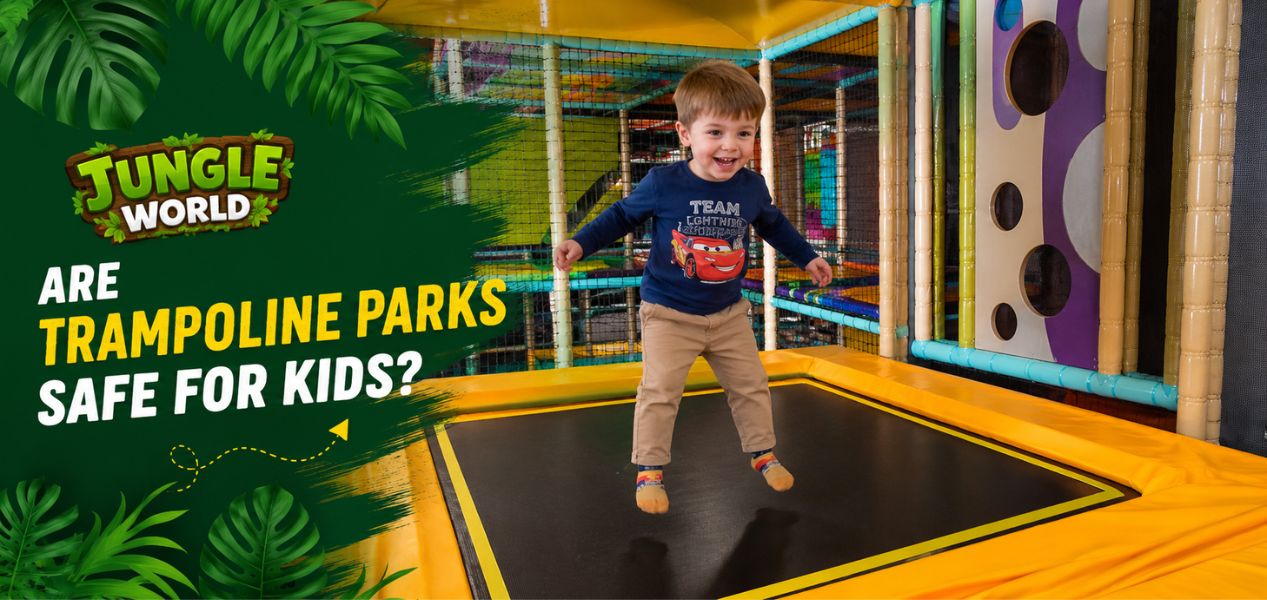
Trampoline parks have become one of the go-to options for a kids' day out in the UK. They're energetic, they wear children out, and most kids absolutely love them. But parents naturally want to know whether all that bouncing comes with a side of risk.
The short answer: trampoline parks can be safe for kids, but the safety level varies a lot depending on where you go and how well the venue manages its operations. Let's break it down properly.
What the Injury Data Actually Says
It would not be fair to pretend there are no risks. The numbers are real and worth understanding.
Figures obtained by ITV News showed that more than 1,000 ambulance call-outs were made to trampoline parks in England, Wales and Northern Ireland over a three-year period, averaging roughly one call-out per day in a single year. These figures do not include people who made their own way to hospital, so the actual number of incidents is likely higher.
Children under 15 make up the majority of trampoline-related injuries, with those under 6 accounting for 22–37% of emergency department visits.
That said, context matters. A 2024 study published in Pediatrics (the journal of the American Academy of Pediatrics) found that within safety-standard-compliant parks, exposure-adjusted injury rates were uncommon and declining over the study period with significant injuries occurring at a rate of just 0.11 per 1,000 jumper hours. In plain terms: most visits end without incident, and parks that follow proper safety standards are getting safer over time.
The type of activity within a park also matters. Injury rates were highest in high-performance jumping areas and foam pit zones, which tend to attract older, more adventurous jumpers attempting riskier moves.
The Biggest Risk Factors for Children
Understanding what causes injuries helps parents make smarter decisions. Here are the main culprits.
Multiple jumpers on the same surface
Approximately 75% of trampoline injuries occur when multiple people are bouncing simultaneously. Smaller children are up to 14 times more likely to be injured when jumping alongside larger individuals. This is one of the most consistent findings across injury research.
Age and physical development
Younger children under five are more likely to sustain head injuries from trampoline use, while older children over eleven are more prone to spinal injuries. Young children simply lack the coordination and body awareness to control their movements on a commercial-grade bouncing surface.
Commercial trampolines vs. home trampolines
According to a British Medical Journal study, children were more than twice as likely to suffer musculoskeletal or orthopaedic injuries at a trampoline park than on a home trampoline, partly because commercial trampolines have higher tensile strength, producing a harder bounce that increases the forces on bones and ligaments.
Falls from the surface
Falls from trampolines account for 27–39% of all reported incidents, making proper padding and barrier design between jumping areas one of the most important safety features to look for.
How UK Trampoline Parks Are Regulated
This is where parents in the UK need to pay attention, because the picture is mixed.
The International Association of Trampoline Parks (IATP) worked with the British Standards Institution, RoSPA, British Gymnastics, Environmental Health Officers, and the Health and Safety Executive to produce PAS 5000, a publicly available standard for the construction and operation of fixed indoor trampoline parks.
PAS 5000:2017 provides practical guidance for the construction of trampoline parks, day-to-day operating requirements, and maintenance. It requires operators to carry out a design risk assessment before opening to the public and to plan for emergency scenarios.
Here is the catch: compliance with PAS 5000 is voluntary, not legally mandated. There are no safety regulations specifically targeting trampoline parks, and just under half of existing parks are members of the IATP.
In the UK, the main standard for trampolines themselves is EN71-14:2018, set by the British Standards Institution. This covers structural integrity, netting, padding, weight limits, and signage. However, compliance is still not universally enforced.
What this means for parents: you cannot assume every trampoline park you visit meets the same standard. Checking for IATP membership, PAS 5000 compliance, and visible safety measures before booking is well worth the few minutes it takes.
What Makes a Trampoline Park Safer for Kids
Not all parks are equal. Here is what to look for when choosing where to take your children.
Signs of a well-run trampoline park:
- Separate age-appropriate zones with clear boundaries between toddlers and older children
- Visible, attentive staff stationed throughout the play areas
- Session capacity limits that prevent overcrowding
- Clear and enforced rules about one person per trampoline at a time
- Padded surfaces between trampolines and around obstacles
- Safety briefings before sessions begin
- Regular equipment inspections and maintenance records available on request
- IATP membership or PAS 5000 compliance signage
Red flags to watch out for:
- No age or weight separation between jumping zones
- Staff who are not actively monitoring the floor
- Overcrowded sessions with no apparent limits
- Poor or damaged padding around trampoline edges
- No pre-session safety instructions for children
Are Younger Children (Under 6) Safe at Trampoline Parks?
This is the question parents of toddlers ask most often, and the medical guidance is worth knowing.
The American Academy of Pediatrics recommends that children under 6 should never jump on trampolines due to the disproportionately high risk of injury relative to their physical development. The concern is that young children cannot yet control their movements effectively, making unpredictable landings far more likely.
That does not mean young children cannot visit play venues, it means they need age-appropriate areas. The best venues separate young children entirely from general trampoline zones. A dedicated soft play or toddler zone, separate from the main bounce area, is the right environment for under-fives.
At Jungle World Blackpool, for example, there is a dedicated toddler zone designed specifically for younger children, alongside clearly separated play zones for different age groups (0–12). This kind of age-zone separation is exactly what the safety guidance calls for.
The Benefits Side of the Equation
Safety research naturally draws attention to what can go wrong. It is also worth acknowledging what goes right.
Trampolining improves balance, core strength, cardiovascular fitness, and muscle tone. Ten minutes of trampolining burns roughly the equivalent of a 30-minute run, while placing significantly less stress on weight-bearing joints than jogging.
For children in particular, active play at a well-supervised venue supports physical development, social skills, and confidence. The goal is not to avoid all bounce-based activity, it is to choose venues that take the safety side as seriously as the fun side.
How to Prepare Your Child Before a Trampoline Park Visit
A bit of preparation goes a long way. Before you arrive, make sure your child knows the basics:
- No somersaults or flips — these are the most common cause of neck and back injuries
- One person bouncing in each zone at a time — even if the park seems relaxed about it
- Land with knees slightly bent — stiff-legged landings cause more injuries
- Stay aware of other jumpers — collisions are a top cause of incidents
- Wear grip socks — most venues require them, and they genuinely help with traction
On the day, wear comfortable clothing that allows movement, and double-check that any younger siblings are kept in age-appropriate areas away from the main trampoline surfaces.
What to Look for When Booking a Venue
Before booking, it takes only a few minutes to check:
- Does the venue have a dedicated toddler or young child area?
- Are sessions capacity-controlled (i.e., do they limit ticket numbers per session)?
- Is there a visible staff-to-floor ratio?
- Does the venue hold IATP membership or reference PAS 5000 compliance?
- What is their hygiene and maintenance record like?
Venues like Jungle World Blackpool operate with session limits, dedicated age zones, trained floor staff, and a 5-star hygiene rating, the kind of measures that directly reduce the risk profile of a visit.
The Bottom Line
Trampoline parks carry real risks, and parents are right to ask questions before booking. The good news is that those risks are manageable when you choose venues that operate with proper age separation, session limits, trained staff, and maintenance standards.
The worst outcomes tend to happen at poorly regulated venues or when basic safety rules are ignored. Doing a small amount of research before you visit checking membership, age zones, and staff practices gives your family a much safer day out.
For families around Lancashire and the Fylde Coast, Jungle World Blackpool offers a structured, age-separated play environment with dedicated staff and a clear commitment to safe operations. Worth a look if you are planning a visit to the Blackpool area.
FAQs: Trampoline Parks and Child Safety
Are trampoline parks safe for kids under 5?
Children under 5 face a higher injury risk on commercial trampolines due to their stage of physical development. The safest approach is to choose venues with dedicated toddler zones that keep young children away from the main bounce areas. Always check age guidelines before booking and supervise young children closely throughout the visit.
What age is appropriate for a trampoline park visit?
Most trampoline parks cater to children from around 3 or 4 years old, provided there is a suitable toddler area. Children aged 6 and over can generally manage the main jump zones safely when proper rules are followed. Always check the venue's own age and height guidelines before you book.
What are the most common injuries at trampoline parks?
The most common injuries include ankle and wrist sprains, fractures, and soft tissue injuries from awkward landings. Collisions between jumpers, falls from trampoline surfaces, and attempted flips or somersaults account for the majority of serious incidents. Sticking to basic rules and staying in age-appropriate areas reduces the risk substantially.
How do I know if a trampoline park is safe to visit?
Look for IATP membership, PAS 5000 compliance, visible and active floor staff, session capacity limits, padded surfaces, and separate zones for different age groups. Read recent Google or Trustpilot reviews for any mentions of crowding or safety concerns. A well-run park will make its safety measures easy to find on its website.
Can my child jump on a trampoline park trampoline with a medical condition?
Always consult your GP before allowing a child with bone conditions, recent fractures, joint hypermobility, or any spinal concerns to use commercial trampolines. Children who are post-surgery or undergoing orthopaedic treatment should avoid trampolining until they receive medical clearance. Most reputable venues include a health disclaimer in their booking process.
Ready for a
Wild Adventure?
Book your Jungle World visit today!

Limited capacity per session - secure your spot now!


